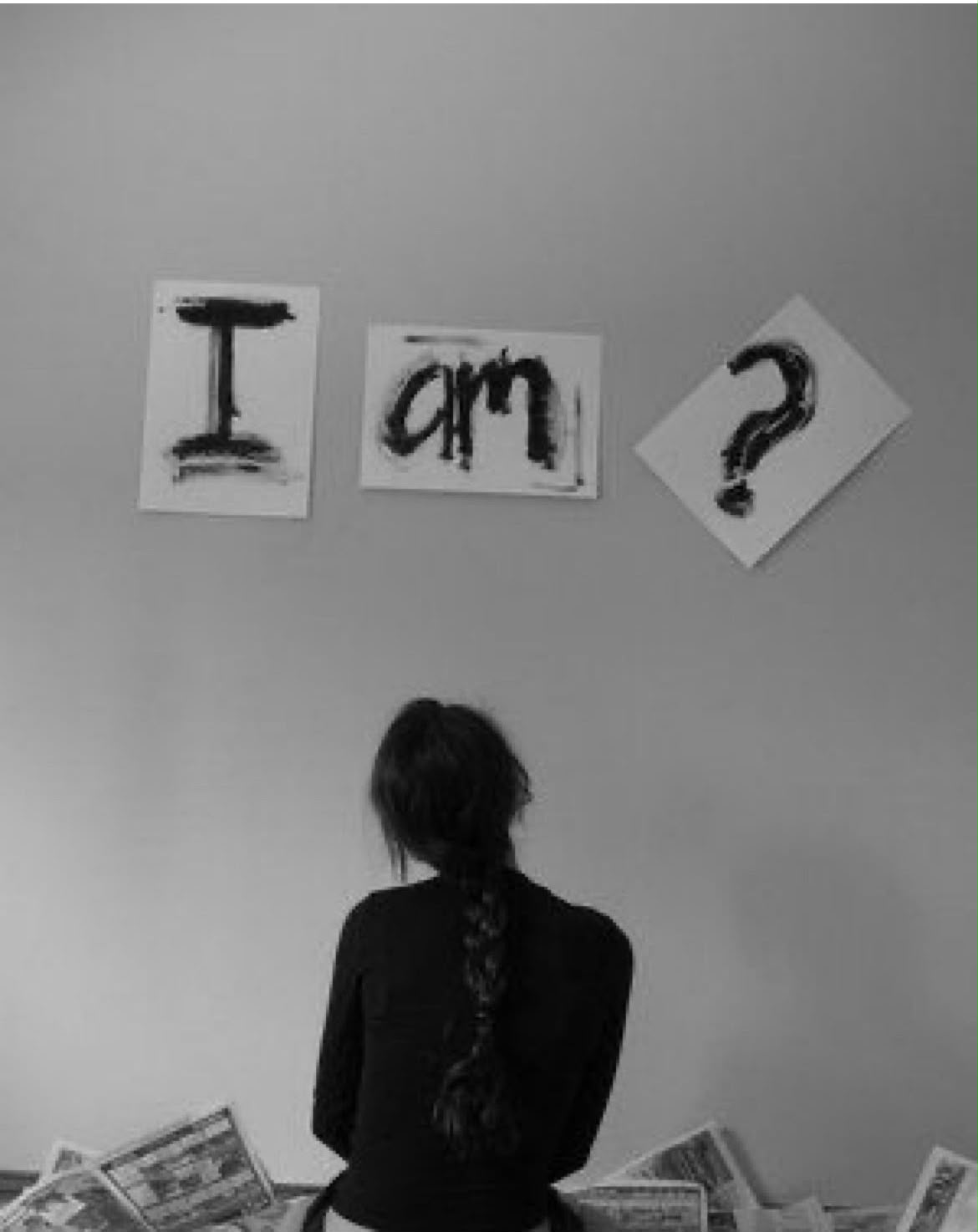
Are We Chasing the Wrong Goals?
In a world driven by competition, comparison, and external validation, the need to constantly prove ourselves has become a societal norm. We often find ourselves trapped in a cycle of seeking approval and recognition irrespective of anything. But what happens when we stop trying to prove ourselves and simply be? Is it really that hard to just exist as we are? Maybe not. Or maybe yes.
But I keep coming back to this question, not because I have a clean answer, but because I genuinely don’t. And I think that discomfort – that inability to just settle on an answer and move on – is telling me something. Maybe it’s telling all of us something, if we’d only slow down long enough to hear it.
The Race Nobody Signed Up For
Somewhere along the way, life became a relentless race, and I kept running, not knowing who set the rules or why I even joined. I’ve lost track of the days when I last did something I truly loved – not for recognition, not to impress anyone, but simply for the joy it brought me. And when I try to remember what that even felt like, I struggle. That scares me more than anything else.
Think about it – when was the last time you did something with zero intention of showing it to anyone? Not posting it, not mentioning it in conversation, not filing it away as a future talking point. Just doing it, quietly, for yourself. For most of us, we have to reach far back to find that memory. And when we do find it, it’s usually from childhood – before the world started grading us, ranking us, sorting us into categories of worthy and unworthy.
We’re told that life’s purpose lies in achieving milestones. Get good grades. Land a prestigious job. Get married on time. Buy the house. Have children. Keep climbing. Keep proving. The script is handed to us so early that by the time we’re old enough to question it, we’ve already built half our lives around it. And questioning it feels not just difficult but almost ungrateful – like spitting on everything people sacrificed for you to have these opportunities. But no one tells us what happens when we finally achieve it – if we ever do. No one prepares us for the silence that follows. That strange, hollow feeling when you’ve ticked every box the world handed you and still wake up wondering if this is it. If this is what all that running was for. We expect a feeling of arrival, some deep sense of completion, but instead we get a brief moment of relief followed almost immediately by the next thing we’re supposed to want. The goalpost moves before we’ve even caught our breath. And the worst part? You can’t even say that out loud. Because the moment you do, someone will remind you of how far you’ve come, how lucky you are, how many people would kill to be in your position. So you swallow it. You smile. You keep going. You perform gratitude while quietly wondering why none of it feels like enough. And in doing so, you become part of the very system that confused you in the first place – passing it forward, unknowingly, to everyone watching.
Whom Am I Proving This To?
But then, whom am I proving this to? And what exactly am I trying to prove? That I can be number one? Fine, but what even is “number one”? These questions might seem pointless, or maybe you think I’m saying this because I’ve never achieved it. But what if I never wanted those things? Does that make me different? Or does it make me honest?
I’ve had this conversation with people I trust, and the responses are always revealing. Some get defensive, as if my questioning the race is an indirect attack on their decision to run it. Some get philosophical for a few minutes and then pivot back to talking about their next goal. And some – a rare few – go quiet. Not because they have nothing to say, but because the question lands somewhere real. Because they’ve thought about it too, at 2am when the noise dies down and all you’re left with is yourself.
We live in a time where self-reflection is simultaneously celebrated and avoided. Everyone says they’re “on a journey” or “working on themselves,” but actual stillness – actual sitting with the uncomfortable question of whether you’re living the life you want or the life you were told to want – that’s rare. Because it’s terrifying. Because what if the answer is no?
What if you’ve spent ten years climbing a ladder that’s leaning against the wrong wall?
We dress our insecurities up in ambition. We call our fear of being ordinary “drive.” We call our need for validation “passion.” And none of that is entirely wrong – humans are complicated, motivations are layered – but there’s a difference between doing something because it genuinely lights you up and doing it because you’re terrified of what people will think if you stop. Most of us have never paused long enough to figure out which one is actually running the show.
The illusion of number one
Being “number one” is glorified everywhere, but what does it really mean? Is it earning the highest salary, gaining the most followers, or having the perfect life on paper? Is it the corner office, the car in the driveway, the wedding that looked beautiful in photos even when the relationship was already cracking underneath?
We’ve built entire economies around the idea that more is better. More followers, more achievements, more recognition. Social media handed us a scoreboard and told us to play. And we did – god, we did. We started measuring our worth in metrics. Engagement rates. Salary brackets. The prestige of the company name on our resume. We started looking at other people’s lives not to feel connected to them but to assess where we ranked in comparison.
And the thing about comparison is that it never works in your favor for long. You look down and feel temporary relief. You look up and feel immediate inadequacy. It’s a game designed to keep you unsettled, because unsettled people keep consuming, keep striving, keep buying into the idea that the next thing will be the thing that finally makes them feel okay.
And even if you achieve it – the top, whatever that means for your particular race – then what? Is there a finish line where someone finally hands you a sense of peace? Because from where I’m standing, it doesn’t look like it. The people already ahead are still running. Some of them are running faster than ever, not out of joy but out of fear – fear that if they slow down, they’ll have to face the same questions I’m asking right now.
The concept of “number one” is a mirage – a moving goalpost that’s never static and rarely fulfilling. You reach it, and it shifts. You reach it again, and it shifts further. At some point you have to ask yourself whether you’re chasing a destination or just addicted to the motion. Whether the running itself has become the identity. Whether stopping, even briefly, would feel like dying just a little.
Because for many of us, it would. We’ve confused our productivity with our worth for so long that rest feels like failure. A quiet evening with nothing to show for it feels wasteful. We’ve internalized the race so deeply that we’ve forgotten it was ever a choice.
The Judgment Of Standing Still
For those of us who question this relentless chase, the world often judges us. People assume we’re unambitious or lazy. “The grapes are sour,” they say, as if rejecting the race is a sign of weakness. As if the only reason a person could possibly step back is because they couldn’t keep up. As if opting out is always a consolation and never a conviction.
There’s a particular kind of social punishment reserved for people who seem content without having “earned” it by conventional standards. If you’re not visibly striving, something must be wrong with you. You must be depressed. You must have given up. You must be lying to yourself. Because the alternative – that someone genuinely looked at what the world was offering and said “no thanks, this isn’t for me” – is too threatening to accept at face value. It raises questions people don’t want to sit with.
But what if we’re not rejecting the race out of fear of failure? What if we’re walking away because we’ve realized it isn’t worth chasing? There’s a difference between giving up and opting out – and most people refuse to see it, probably because acknowledging it would force them to question their own race.
I think about all the times I’ve caught myself justifying stillness. “I’m just recharging.” “I’ll get back to it soon.” “I’m being strategic.” As if simply existing – simply choosing not to be in constant pursuit of something – required a defense. As if my inherent worth needed to be wrapped in productivity to be acceptable. We’ve been so thoroughly conditioned that even our rest comes with an asterisk.
And when someone genuinely does walk away – from the corporate ladder, from the social performance, from the grind – we call it a “quarter-life crisis” or a “burnout” or a “phase.” We pathologize the clarity. Because if they’re right, if stepping away really is a valid choice and not a breakdown, then what does that say about the rest of us who are still here running?
What We Left Behind?
Here’s something nobody talks about enough: grief. The specific grief of realizing you’ve spent years – maybe the best, most energetic years of your life – chasing something that didn’t actually belong to you. Goals that were assembled from other people’s expectations, other people’s definitions of success, other people’s dreams layered so neatly over yours that you stopped being able to tell the difference. There’s a version of you that existed before all of this. Before the grades and the rankings and the performance. A version that picked up things out of pure curiosity, that spent time on something simply because it felt alive, that hadn’t yet learned to filter every instinct through the question of “but what will this look like to other people?”
I’ve been trying to find that version of myself lately. It’s harder than I expected. Not because that person is gone, but because so much noise has been built on top of them. Layers of expectation, habit, and identity that feel impossible to peel back without losing yourself in the process. Who am I without the things I’ve been working toward? Who am I when I’m not performing competence, progress, ambition?
These are not comfortable questions. But I think they’re the most important ones. Because if you can’t answer them – if the only self you can locate is the one in pursuit of something – then you haven’t been living. You’ve been preparing to live, perpetually, indefinitely, right up until the moment you run out of time. We lose things in the race. Small things at first – hobbies that don’t translate into income, friendships that require too much time, afternoons with no agenda. Then bigger things – a sense of wonder, the ability to be bored without reaching for your phone, the capacity to enjoy something without immediately thinking about how it could be useful. And eventually, if we’re not careful, we lose the thread of who we actually are underneath all of it.
The Courage of Contentment
I think a lot of us already know, deep down, that something is off. We just don’t say it because there’s no socially acceptable script for “I don’t want what everyone else seems to want.” There’s no applause for choosing stillness. No LinkedIn post that goes viral because someone decided to stop optimizing their life and just live it. Contentment doesn’t perform well. It doesn’t photograph well either.
We’ve romanticized the hustle so completely that the opposite – ease, simplicity, a life built around what actually matters to you – has come to feel almost suspicious. Like you must be hiding something. Like you must not be trying hard enough. Like comfort is something you’re supposed to feel guilty about unless you’ve suffered sufficiently to deserve it. But here’s what I’ve started to believe, slowly and imperfectly: contentment takes more courage than ambition. Not because ambition is easy – it isn’t – but because ambition gives you something to hide behind. It gives you a story, a direction, a sense of forward momentum. Contentment strips all of that away. It asks you to stand in the open with nothing to prove and say, “this is enough.” And in a world that profits from your feeling of inadequacy, that is a radical act.
Choosing a quieter life doesn’t mean choosing a smaller one. It means choosing one that fits you rather than one that impresses others. It means doing the difficult work of figuring out what you actually value instead of borrowing someone else’s values and hoping they’ll eventually start to feel like your own.
That’s harder than it sounds. Because we are social creatures, and the desire to belong – to be seen as worthy by the people around us – is not weakness. It’s deeply human. The problem isn’t that we care what people think. The problem is when that care becomes the primary engine of our decisions, when we stop being able to separate the life we want from the life that will be approved of.
Redefining What Success Looks Like
The truth is, by stepping away from the race, we may actually be choosing to live more authentically. It’s not about rejecting success – it’s about refusing to outsource the definition of it. It’s about recognizing that success, as handed to us by society, is a one-size-fits-all label being applied to endlessly different human beings with endlessly different needs, desires, and capacities for joy.
What does success look like for someone who values depth over breadth? For someone who would rather know a few things profoundly than many things superficially? For someone who finds meaning in small, quiet moments rather than large, visible ones? The current model doesn’t have great answers for them. It barely acknowledges them.
Real fulfillment – the kind that doesn’t evaporate the morning after the achievement – tends to come from alignment. From building a life where your actions reflect your actual values rather than performed ones. From relationships that are honest rather than strategic. From work that engages you rather than merely impresses others. None of this is glamorous. Most of it won’t make it onto a highlight reel. But it stays with you in a way that trophies don’t.
When we stop running toward someone else’s idea of achievement, we create space to rediscover what truly matters to us – peace, happiness, and being ourselves, without the need for constant validation. And that space, as uncomfortable and unfamiliar as it feels at first, might be the most honest thing we’ve ever given ourselves.
It won’t happen overnight. You don’t just decide to stop caring about external validation and immediately feel free. The conditioning runs deep. There will be days when the old metrics creep back in – when you catch yourself measuring your worth against someone else’s progress, when the silence starts to feel like falling behind. That’s okay. It’s part of it. The goal isn’t to be immune to the race. It’s to become conscious of it. To make a choice rather than run on autopilot.
The Life on the Other Side
We spend so much of our lives becoming who the world expects us to be that we forget to ask who we actually are underneath all of it. Strip away the titles, the comparisons, the carefully curated image – what’s left? That’s the person worth knowing. That’s the life worth building.
And maybe that person is quieter than you expected. Maybe they want less than you’ve been working toward. Maybe they want more, but differently – more connection, more presence, more time for things that will never appear on a resume. Maybe they’re someone you haven’t been on good terms with in a while, because the race required you to leave them behind in favor of someone more palatable, more productive, more sellable. Getting back to that person is slow work. It doesn’t announce itself. It happens in small, unremarkable moments – a morning where you do nothing and don’t feel guilty about it, a conversation where you’re fully present instead of mentally composing how you’ll summarize it later, a choice that costs you approval but gains you something realer. It’s not dramatic. It rarely is. But there’s something on the other side of the race that I think most of us are too afraid to admit we want: rest. Not the performative rest of a wellness retreat or a scheduled self-care Sunday, but actual rest. The kind that comes from no longer fighting yourself. From no longer needing to be anything other than what you are. From waking up and not immediately reaching for proof that you’re worth something.
That’s not a small thing. That’s everything.
We Are Enough
Perhaps that’s the most important thing we could ever prove: that we are enough, exactly as we are. Not when we get the promotion. Not when we hit the number. Not when the world finally nods in approval. Right now. As we are.
But I want to be careful here, because this can become its own kind of performance if we’re not honest about it. Saying “I am enough” while still secretly scorekeeping, still quietly measuring yourself against everyone around you, still waiting for someone to confirm it – that’s not the same thing. The words without the belief are just another mask.
Actually believing it – actually feeling it in the moments when the world is telling you otherwise – is the work. And it is work. Long, unglamorous, deeply personal work that doesn’t come with external rewards. Nobody gives you a medal for making peace with yourself. Nobody promotes you for choosing authenticity over approval. The return on investment is entirely internal, which makes it the hardest sell in a world that only recognizes visible returns. But here’s what I keep coming back to, the thing I can’t quite argue myself out of no matter how many times I try: at the end of it all, you are the one who has to live your life. Not the people whose approval you’ve been chasing. Not the society that handed you the script. Not the version of success that looks good from the outside. You. And if you’ve spent that life running a race that was never really yours, that’s a loss no achievement can compensate for.
So maybe the question isn’t whether you can win. Maybe the question is whether the game is even worth playing. And maybe – just maybe – the most rebellious, most courageous, most profoundly human thing you can do is to put the scorecard down and figure out what winning actually means to you.
That’s not weakness. That’s not laziness. That’s not the sour grapes defense.
That’s just the truth – and most people are too busy running to sit with it long enough to believe it.
Leave a Reply