On equality, hypocrisy, and the home that never needed a rulebook
Have you ever questioned a belief system so deeply embedded around you that even the people living inside it cannot see it anymore?
I have. Many times. And the older I get, the more I realise how important that question is — not to point fingers, not to create conflict, but simply to understand. To see clearly. To ask: is this actually right, or is this just what we were taught?
The Behaviour Nobody Questions
I often question a specific kind of behaviour around me — the kind where belief systems go unexamined for so long that people stop seeing them entirely. How can you live a certain way and not even acknowledge it? How can you carry something harmful without ever stopping to ask where it came from?
This behaviour is contagious. It passes quietly from one generation to the next, wrapped in tradition and familiarity. And when someone questions it — when someone simply asks why — they are called a rebel. Difficult. Ungrateful. As if the question itself is the problem rather than the thing being questioned.
The most striking version of this is the one that calls for equality but still discriminates. That speaks about humanity but remains inhuman toward the voiceless. That holds up values it does not actually live. This is rarely conscious cruelty — most of the time it is simply a belief system that was never examined. A way of seeing the world that was inherited and never questioned.
What Equality Actually Is
I often question this further — because I feel equality eventually becomes subjective, and demands become the narrative of that equality. And conveniently, people call it feminism.
But then this feminism becomes about who opens the door or who pulls the chair. Irrational behaviour. Justifying mistakes. However, I believe mistakes don’t clearly need a justification — because if someone likes you, if someone believes in you, they will accept those mistakes as flaws. They know that making mistakes is self-justifying in itself because it is experience. It is growth.
It is beyond that, I feel. Equality is empathy toward whoever is falling short — irrespective of bias. If I am lacking one part, someone should complete it. As simple as that. Not because of a label or a movement or a statement. Because that is what it means to see another human being and respond to what they actually need.
The Prevention We Inherit
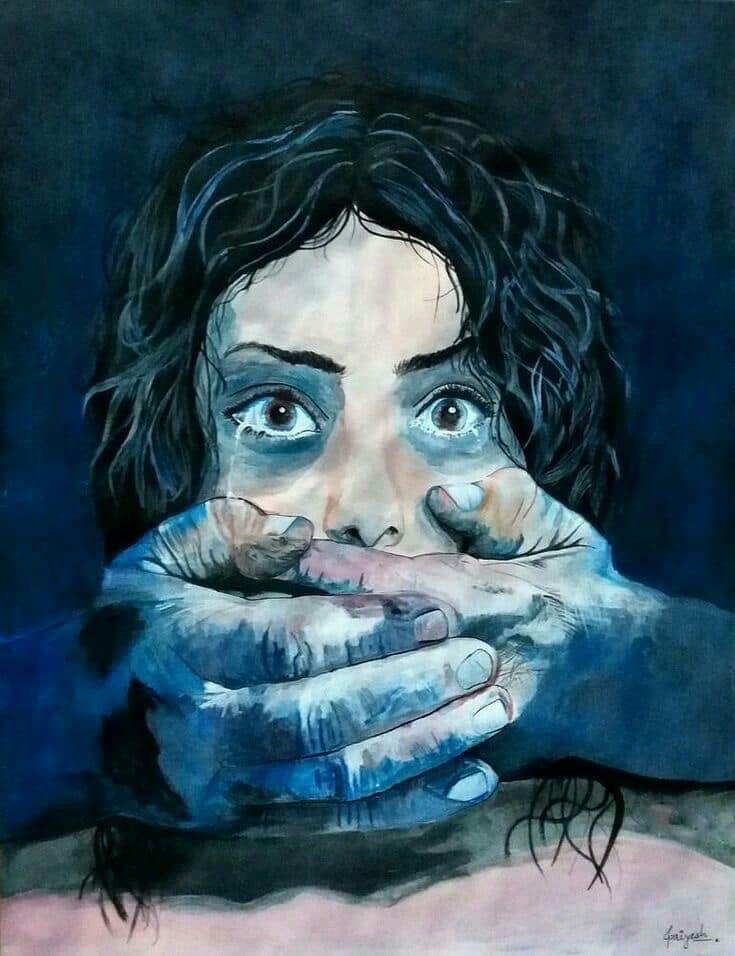
As a female, we are advised to exercise prevention. Every step is carefully monitored. Wear decent clothes. Make sure your panty lines aren’t visible. Make sure you do not wear sleeveless shirts. Be sure to stay alert. Avoid certain routes. Come home in time. Keep your head down, walk fast and straight home.
All of this — this constant vigilance, this perpetual restriction — is framed as care. As protection. As love. But it is actually a message: your safety is your responsibility. Your body is something to manage. Your presence in the world is something that needs to be minimized.
And then we are told to be strong. To be independent. To prove ourselves. To show that we are capable. To stand up for ourselves.
But we are also told to be careful. To be quiet. To not make a fuss. To not draw attention. To accommodate. To adjust. To understand.
Do you see the contradiction? We are told to be powerful and small at the same time. To speak up and stay silent. To be strong and protected. It is an impossible equation.
The Home Without a Rulebook
For a long time I lived with my mother. And in our home there was no rulebook for work.
I can do electric work. I do all those things that are generally considered male responsibilities — dividing the monthly budget, changing bulbs, handling sales, and even installing the आकाशकंदील during Diwali. My mother on the other side is progressive in this way. She believes there is nothing like males are supposed to do this and females shouldn’t do that. It is just about how you think and the narrative you set around it. She never announced this. She never made it a statement. She just lived it — quietly, consistently, every single day. And I grew up watching her, learning from her, becoming someone who never thought to ask for permission to handle what needed handling.
We were often judged by our surroundings. People felt — how can females run a house? And many people had the nerve to ask my mother directly: who earns in your house?
We laugh about it now.
Because we never asked such questions to a house full of patriarchy.
The Prevention Narrative
As a female, we are advised to exercise prevention. Wear decent clothes. Make sure you do not wear sleeveless shirts. Be sure to stay alert. Avoid certain routes. Come home in time. Keep your head down. Walk fast and straight home. This is the narrative we inherit. Not empowerment. Not capability. But prevention. The constant message: protect yourself because the world will hurt you. And the flip side, unstated but always there: if something happens, it is because you did not prevent it well enough. We are taught that our safety is our responsibility. That our bodies are the problem. That our presence requires management. That we must constantly be vigilant, constantly aware, constantly small.
And we call this care.
What Woman’s Strength Actually Is
Woman’s strength is rarely a choice — it is a requirement.
It often means constantly proving yourself in ways no one acknowledges. What begins as care, love, and responsibility conveniently turns into duty, as if it was always expected. Labels are easily tagged — too emotional, too bold, too silent, too much — and yet she is still assumed to behave well, to adjust, to understand.
Her clothes are questioned. Her choices are doubted. Her language is judged. Her past is dissected. Her reactions are monitored. Her identity is defined by others. Her knowledge is challenged. Her ability is underestimated. Even her strength is tested again and again, as if it needs validation to exist.
When she endures, it is taken for granted. When she speaks, she is corrected. When she finally sets boundaries, she is called difficult.
Being a woman is not about proving power once. It is about surviving a lifetime of expectations while still being asked to prove you deserve the space you already occupy.
The Hypocrisy That Passes as Tradition
Here is what I find most difficult to sit with. The people who judge a home like ours — two women, no rulebook, everything working — are often the same people who speak loudly about values. About family. About how things should be. But they never turn that same scrutiny inward. They never ask what their own house looks like from the outside. Whether the structure they are defending is actually serving everyone inside it or just the people at the top of it.
This is the contagious part. When a belief system goes unquestioned long enough, it stops looking like a belief system. It starts looking like reality. Like nature. Like the way things simply are. And anyone who questions it is not asking a reasonable question — they are being difficult. They are being a rebel. But here is what I have come to believe: the rebel is often the one seeing most clearly. The one who refuses to inherit something without examining it first. The one who asks why — not to destroy anything, but because they genuinely want to understand.
That question is not a threat. It is the beginning of something better.
The Men Who See Differently
In all of this, I have met hardly few people who are men but had a very different perspective toward this. Men who believed in equality. Men who believed that a patriarchal society is pathetic. Men who questioned the same belief systems that most men inherit without questioning. These men are rare. But their existence proves something important: this is not about gender. This is about consciousness. About the willingness to examine what you have been taught. About the courage to believe differently. To accept the reality very openly.
When I meet a man who sees women as equal, who does not need his position confirmed by someone else’s diminishment, who is secure enough to share space and power, I see what is possible. I see that the system is not inevitable. That people can choose differently. That inequality is not natural; it is taught, or may a times it’s pass on what we see around we silently believe it and behave accordingly without self analysing whether it’s right or wrong. And I am grateful for these men who question those patterns, who don’t blindly follow customs which only pampers their male ego. Because they show that the path forward is not about women fighting men. It is about conscious people — of any gender — refusing to inherit damage.
Why Equality Actually Matters
Equality is not about fairness. Fairness is too small a word.
Equality is about the recognition that a home functions better when both people can do what needs doing. That a society thrives when half its population is not spending energy on prevention instead of creation. That the world changes when people are allowed to be fully themselves instead of constantly performing the version of themselves that others approved.
Equality is important because when women can change a bulb, install a lantern, manage money, make decisions without asking permission — they are not just doing tasks. They are reclaiming the parts of themselves that were stolen. They are becoming whole.
Equality is important because when a man can cook, can care, can ask for help, can be soft without losing respect — he too is becoming whole. He is freed from the prison of needing to be less than fully human.
Equality is important because children who grow up in homes where both parents work, both parents decide, both parents care — those children never learn to fear or resent the other gender. They just learn that humans are capable of whatever they choose to be capable of.
Equality is important because a society that only uses half its talent, half its brilliance, half its potential is a society that is failing itself.
Equality is not a debate. It is not something to vote on. It is simply the baseline requirement for a functioning, thriving human world.
What My Mother Passed On
My mother never used a label for what she was doing. She was not making a political statement when she taught me to change a bulb or manage a budget. She was just raising a daughter who could handle her own life. And what she passed on — without naming it, without performing it — is the thing I value most. Not a skill set. A way of seeing. The understanding that capability has nothing to do with gender. That a home functions on effort and care, not on who is traditionally supposed to provide what. That the question of who earns, who works, who decides — these are not questions about gender. They are questions about the specific people in the room and what they are each able to give. That is equality in its simplest, most honest form. Not a debate. Not a demand. Just two people — or in our case, two women — looking at what needs doing and doing it.
Why Equality Actually Matters
Equality is not about taking something away from men. It is not about power struggle or point-scoring or revenge. Equality is about a world where a person’s capability is not determined by their gender. Where their value is not measured by how well they fit into a predetermined role.
Equality matters because a woman should not have to prove herself worthy of basic respect. Because a man should not have to perform invulnerability to be accepted. Because nobody should have to shrink to make someone else comfortable.
Equality matters because when we stop assigning tasks based on gender and start assigning them based on ability and willingness, everything works better. The family functions better. The home functions better. The world functions better. Equality matters because it teaches children that they are free. Free to be who they actually are. Free to choose what they want to do. Free to fail and try again without the weight of gender expectations crushing them.
Equality matters because it is the foundation of everything else. Without it, we are building homes on lies. We are raising children to distrust themselves. We are creating a world where half the population is taught to shrink and the other half is taught that shrinking is their right. My mother understood this. She did not make speeches about it. She just lived it. And in doing so, she showed me that another way is possible.
The Life on the Other Side
When you grow up in a home without the rulebook — when nobody tells you what you cannot do based on who you are — you carry something into the world that is very hard to describe but immediately recognisable. You do not wait for permission. You do not shrink in spaces where you are not expected. You do not measure your capability against someone else’s assumption of your limitations. You just do what needs doing, the way my mother always did, the way she taught me to do. And you start to see, very clearly, the difference between people who live their values and people who only speak them. The difference between genuine equality — the kind that shows up in small, daily, unglamorous ways — and the performed version that makes noise but changes nothing.
Real equality is quiet. It looks like a mother and daughter hanging a lantern together on Diwali. It looks like a budget divided by whoever is best at numbers. It looks like a home where nobody asks who is supposed to do what because everyone just does what needs to be done.
It does not need a label. It does not need an audience. It just needs people who never learned to see a reason why not.
The Question That Changes Everything
We never asked such questions to a house full of patriarchy. And they still do not.
But maybe it is time they started asking them of themselves. Maybe it is time they stopped telling their daughters to prevent, and started teaching their sons to respect. Maybe it is time they stopped calling strength requirement, and started calling it choice. Maybe it is time we all stopped inheriting damage and started building something better.
The question is simple. It is not revolutionary. It is just: is this actually right, or is this just what we were taught?
And once you ask it, everything changes.
Author’s Note: Equality is not a statement. It is not a movement. It is simply two people — or more — looking at what needs doing and doing it. Without asking who is supposed to. Without measuring against tradition. Without needing permission. Just doing it. That is all it takes to change the world. One home at a time


Leave a Reply