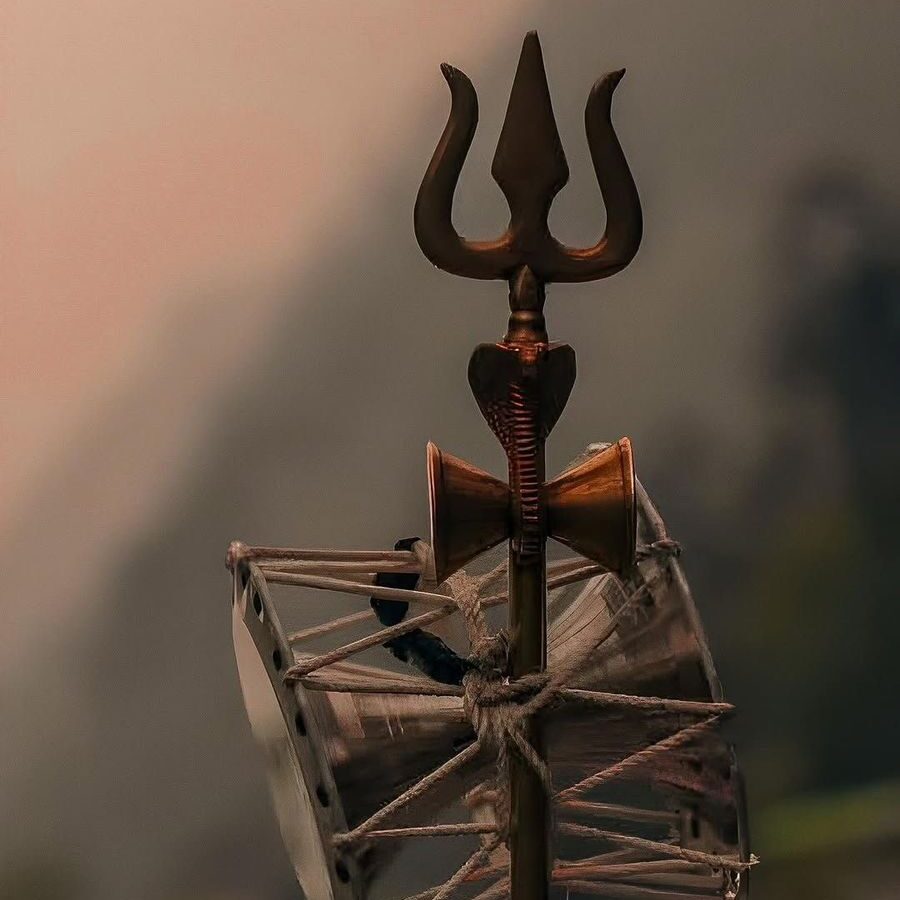
On faith, devotion, and what it means to worship without transaction
A friend said to me recently, “I’ve stopped worshipping God because everything happens as it is written. Nothing really changes. You worship Shiva — did He fulfill your wishes?”
I smiled and replied, “Shiva didn’t promise me fulfilled wishes. Shiva taught me Nirvana.”
She was quiet for a moment. I think she expected a different answer — a defence of prayer, a list of things that had worked out, proof that devotion produces results. But that is not what I have found in faith. That is not what Shiva has ever offered me.
And honestly, it is the most freeing thing I have ever understood about God.
What My Mother Never Said
My mother never introduced me to God through fear. This is rarer than it sounds. Most of us arrive at religion through rules — through what we must do and must not do, through the consequences of falling short, through a God who is watching and keeping score. We learn to worship as a kind of insurance. As a transaction. If I do this, perhaps something good will happen. If I don’t, perhaps something won’t.
My mother never taught me that.
She taught me prayers — not as obligation but as conversation. She told me that work is worship. That God is not confined to a temple or a ritual or a specific hour of the day. She told me God is everywhere — in minute things and in larger ones, in the ordinary and in the extraordinary, in the quiet of a morning and in the chaos of a hard day.
That stayed with me. It shaped everything that came after.
Over the years I started believing it more and more. Not because life gave me everything I asked for. But because I began to understand that faith was never about asking in the first place.
What Nirvana Actually Means For Me
When I say Shiva taught me Nirvana, I don’t mean escaping life or becoming untouched by pain. I mean learning peace in the middle of it.
Shiva taught me that I don’t have to fight every moment. That I don’t have to demand answers for everything. He taught me how to sit with silence, how to breathe through chaos, and how to stay steady when life feels heavy. Nirvana, for me, is the quiet acceptance that not everything needs to be controlled, fixed, or questioned.
Shiva stands for stillness even when the world is loud. He teaches calm without weakness, surrender without fear, and strength without ego. In moments when I feel lost or overwhelmed, remembering Shiva brings me back to myself. Not because my wishes are fulfilled, but because my heart feels lighter.
That quiet grounding — that inner peace — is my devotion. He taught me calmness, balance, and the understanding that not every storm needs the same reaction.
Worship Is Not a Transaction
Shiva also gave me a realisation — that worship isn’t only about asking for things.
Joining hands, chanting mantras, fasting, only to expect Him to fulfill my wishes — today, that feels incomplete to me. Not wrong. Just incomplete. Because the more I worship, the more I realise that He knows me better than I know myself. And with that trust comes a deeper faith — that He will shape my life beautifully. Not necessarily the way I ask, but the way I need.
For me, worship isn’t a transaction. It’s a relationship.
It’s learning how to remain grounded when life doesn’t go as planned. How to sit with silence without fear. How to find balance within chaos. Faith, to me, is not about demands — it’s about transformation. About who you become through the practice of it. About what shifts inside you when you stop trying to negotiate with the universe and start simply trusting it.
There is a kind of peace that comes from that surrender. Not the peace of getting what you wanted. The peace of no longer needing to control what comes next.
God Is Supreme Energy, the eternal truth
God, for me, is not a figure seated somewhere distant and unreachable. God is supreme energy. Eternal. Present in everything — in the prayer, in the silence after the prayer, in the stranger who holds a door, in the animal who loves you without condition or calculation.
When I began to worship — really worship, not just perform the ritual — something shifted in how I saw the world. Prayers, for me, stopped being about shlokas alone. They became something quieter. Something that happened not just in the moment of folding my hands but in how I moved through the rest of the day.
I started looking at humans more like humans. Which sounds simple. But what it really means is this — I started accepting that they have flaws. That they make mistakes. That their imperfections are not reasons to dismiss them but simply proof that they are human, like me, trying to find their way. I started valuing humanity more than anything else. Not the idea of it — the actual, complicated, imperfect reality of it.
And then there is Gabbar.
My dog. My fur baby. The one who, without a single word, without a single lesson intended, taught me something that years of reading and reflection had not quite managed to.
Gabbar taught me to see people beyond their flaws. Not because he is wise in the way we understand wisdom. But because he simply does not carry what we carry. He does not hold grudges. He does not calculate. He does not remember that you were short with him yesterday and withhold his love today. He sees you — just you, as you are in this moment — and he loves you fully. Without the weight of everything that came before. Without the condition of everything that comes after.
I watched him do this and I thought — this is what I am trying to learn. This is what worship is trying to teach me. And he already knows it. He was born knowing it.
This is why, I think, Shiva is called Pashupatinath. The lord of all living beings. The one who holds every creature — every animal, every bird, every being that walks or crawls or flies on this earth — as his own. As special. As his favourite.
And I have come to believe that animals are a little more special to him. Not because they are more important than humans. But because they have not forgotten what humans have spent centuries trying to relearn.
They do not carry jealousy. They do not know revenge. They do not hold hatred in their hearts and call it justice. They love with their whole being, without strategy, without score-keeping, without the heavy human habit of deciding who deserves their love before they give it.
People and I say this gently, because I am one — we struggle with this. We go beyond flaws, sometimes. We rise above jealousy, sometimes. We choose love over hatred, sometimes. But it costs us something. It is a practice, a discipline, a decision we have to make again and again.
For Gabbar, it is just Tuesday.
Pashupatinath sees this. I believe he sees it and he holds those creatures — the ones who love without agenda, who live without malice, who greet each morning with the same open heart regardless of what the previous one brought — with a particular tenderness.
And through Gabbar, I have felt a little of that tenderness too. The reminder that I do not have to earn love by being perfect. That I am already held. That the energy which moves through everything — through temples and through animals and through the quiet of an ordinary morning — is not keeping score.
It is just here. Eternal. Waiting for me to slow down enough to feel it.
Spirituality Beyond Religion
I want to say something carefully here, because I think it matters.
Spirituality, for me, is beyond any single practice or tradition. It is the most beautiful thing — this connection with yourself and with something larger than yourself. It does not require a temple, though a temple can hold it beautifully. It does not require a specific ritual, though ritual can be a doorway into it. It does not require you to be perfect or consistent or certain.
It just requires presence. The willingness to turn inward. To sit with the silence and let it speak. Finding peace in chaos. Believing that God is everywhere — in the small things and the large ones, in the people who love you and the ones who hurt you, in the loss and the love and all the ordinary moments in between. That is what spirituality means to me.
Not a set of rules. Not a transaction. A relationship with something that holds you even when you cannot hold yourself.
What Faith Has Given Me
My friend asked if Shiva fulfilled my wishes. And my honest answer is that I stopped keeping that kind of score a long time ago.
What faith has given me is harder to measure but more real than any wish fulfilled. It has given me the ability to sit with uncertainty without falling apart. To face difficult seasons without losing myself entirely. To feel, even in the heaviest moments, that I am not alone in them.
It has given me stillness. Not the absence of difficulty — I have had plenty of that. But a place inside myself that remains steady even when everything around it is not. A quiet centre that I can return to. A grounding that does not depend on circumstances being good.
That is what my mother was pointing to when she told me God is everywhere. Not a God who removes difficulty. A God who is present within it. A God who does not promise ease but offers something more sustaining — the capacity to move through whatever comes with grace, with faith, and with a heart that remains open.
That, for me, is everything.
The Life on the Other Side of Faith
When you stop treating faith as a transaction — when you stop bringing your list of wishes and waiting to see which ones get answered — something opens up. You stop measuring your devotion by its results. You stop feeling abandoned when things don’t go your way. You stop the exhausting negotiation of if I do this, perhaps He will do that. And in place of all that effort, something quieter arrives. Trust. Simple, undemanding, unshakeable trust. Not the trust that says everything will be fine. But the trust that says whatever comes, I will not be alone in it. Whatever shape my life takes, something larger than me is present in it. And that presence — steady, patient, eternal — is enough.
Spirituality is finding peace in chaos. It is believing that God is everywhere, from the smallest moment to the largest one. It is the relationship that asks nothing of you except your presence and gives you, in return, the most extraordinary gift — yourself. More whole, more grounded, more at peace than you were before. Shiva didn’t promise me fulfilled wishes. He gave me something better. He gave me the stillness to stop needing them.
Author’s Note: Worship is not a transaction. It is a transformation. And the most profound changes it makes are the ones that happen quietly, inside, where nobody else can see.
Leave a Reply