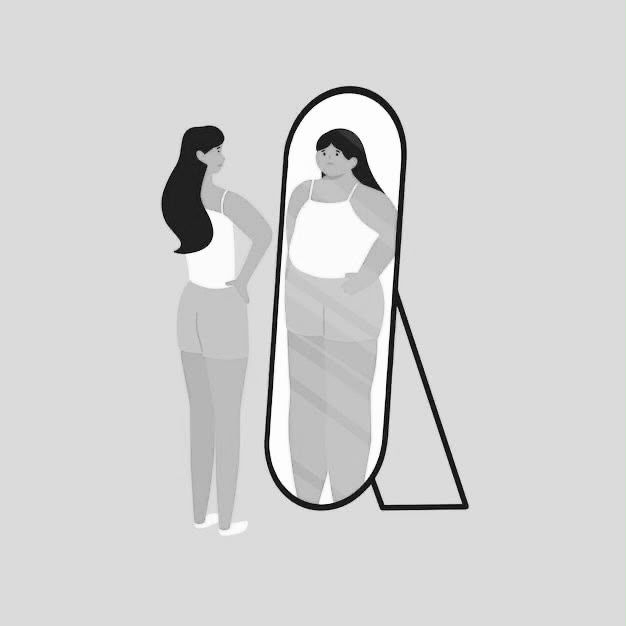
On appearance, vision, and what we actually see when we look at someone
How often do you meet people around you who see only you?
I guess hardly a few. People call you out for being skinny, fat, having dark skin. Why? I mean, is it that difficult to just see you?
Now tell me: when was the last time you met someone new and the first thing you noticed was how kind they were? How patient. How generous with their attention. How genuinely they listened when you spoke?
It starts so casually. So conversationally. Like it costs nothing.
“How much weight have you put on.” Said with concern, almost. Like it is care. Like they are worried about you. “How lean you have become. Are you sick?” Said the moment the weight is gone. The same voice, the same tone, the same unsolicited arrival into your body as if it belongs to everyone.
The Commentary That Never Ends
Fat. Thin. Fair. Dark. Tall. Short. Curly hair. Straight hair. There is no version of a body that escapes commentary. There is no way to exist physically in this world without someone finding the angle from which to critique it. You lose weight and they say you have gone too far. You gain it and they say you have let yourself go. You lighten and they notice. You darken and they notice that too.
It never ends. The words just change. And what I find most exhausting — it does not make me angry now. It makes me wonder: why? And how long is it going to last?
The Question Nobody Asks
What I find most exhausting is that nobody stops to ask: what exactly is the intention here? What are you hoping to achieve? Do you think the person standing in front of you has not looked in a mirror? Do you think your observation is new information? Do you think they have not already felt every word you are about to say, felt it more deeply and more privately than you will ever know? They have, right? They do know all those things. What is the point of you coming and addressing that? You are not telling them something they do not know or feel surprised about.
A Limited Vision
Here is what I have come to understand about this: most of the time, it is not cruelty. It is not even thoughtlessness, not entirely. It is something smaller and sadder than that.
It is a limited vision. It is just the concern about superficial appearance. When the first thing someone sees — the only thing, really — is the surface of a person, it says something about the size of their world. About how much they have been taught to look for. We were raised, most of us, in a culture that placed enormous weight on appearances. Fairness creams were sold as confidence. Weight loss was sold as health. A certain kind of face, a certain kind of body, a certain kind of presence was held up as the standard — and everything else was measured against it. So people learned to look. And then they learned to comment on what they saw. And then they called it honesty. They called it concern. They called it just saying.
I feel pity, more than anger, for the ones who see the world this way. Not because they are bad people. But because they are missing so much. They are standing in front of a person — a whole, complicated, feeling, dreaming, struggling human being — and all they can see is the container. The packaging. The surface. That is not a small blindness. That is an enormous one.
The Weight of One Comment
But here is what I want you to understand. What I need you to understand. Because I think it gets lost in how casually these things are said:
One comment can stay for years. One careless observation — made in passing, forgotten by the person who said it before they even finished the sentence — can lodge itself in someone and not let go. It can be the thing they think about when they look in the mirror every morning. The voice they hear when they reach for food. The standard against which they measure themselves for years, sometimes decades, sometimes for the rest of their life. I know this because I have felt it. That specific feeling of being made to feel not enough because of how you look. Of suddenly seeing yourself the way the comment saw you — reduced, assessed, found wanting. Of walking away from a conversation and carrying something heavy that was not yours to carry.
The Chase for a Moving Target
And what happens next is the real damage. Because you do not just feel it and let it go. You start trying to fix it. You apply the fairness cream. You try the weight loss supplement. You change the clothes, the hair, the way you carry yourself in a room. You adjust and adjust, chasing a standard that was never stable to begin with, trying to become something that will finally be beyond comment.
But here is the truth that nobody tells you when you are in the middle of all that adjusting: it will not end. Not because you are not enough. But because the standard was never real. It was invented. It shifts. It contradicts itself. It tells you to be thinner and then worships curves. It tells you to be fair and then calls dark skin beautiful when it becomes fashionable. It is not a destination. It is a moving target designed to keep you running.
And while you are running, you are losing something. The relationship with your own body. The ability to look in a mirror without the voice of someone else’s comment narrating what you see. The simple, ordinary, radical experience of existing in your skin without apology.
What Beauty Actually Is
This makes me wonder: what does beauty mean to me?
It is simple. It is actually who you are from within. People who look amazing and deep down criticise you — are they really beautiful?
Inner beauty. I know. It sounds like something stitched on a cushion. It sounds like what people say when they do not know what else to say. But I mean it in a more practical, less decorative way than that.
Kindness is beautiful. Not as a metaphor — as an actual, observable, felt thing. When someone is genuinely kind to you, you feel it in your body. When someone listens without waiting to speak, something in you relaxes. When someone is patient with you on a hard day, something in you opens. These things are real. They have weight and warmth and presence.
Compassion is beautiful. Care is beautiful. The way some people make you feel seen — not assessed, not measured, just seen — that is one of the most beautiful things a human being can offer another. And none of it has anything to do with what they look like.
The Real Beauty
The most beautiful people I have known in my life were not the ones the world would have put on a billboard. They were the ones who made you feel like you mattered. Like you were enough. Like you could stop performing and just be. That is beauty. The real kind. The kind that will actually stay forever.
Author’s Note: Beauty is not what you see when you look in the mirror. Beauty is what someone feels when they are in your presence. It is kindness. It is attention. It is being seen without being judged. That is the only beauty that matters.
Leave a Reply