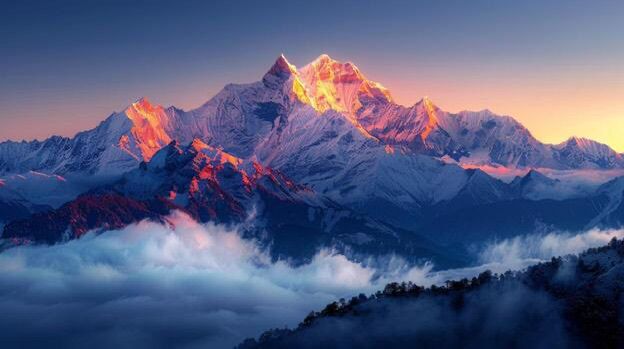
Nature’s wake-up call. Are we listening? The only visible power.
I guess we are nothing in front of nature. We are nobody to define ourselves when we stand in front of nature. Nature truly understands only the language of love and care and shows exactly similar qualities back.
Today, when I felt this, I wondered: what if the supreme power wakes up? Not that they are deeply asleep, but maybe they are ignoring what’s going on around us. Maybe they are ignoring what’s happening to nature with the hope that humanity is still alive, still capable of understanding this fact.
But are we?
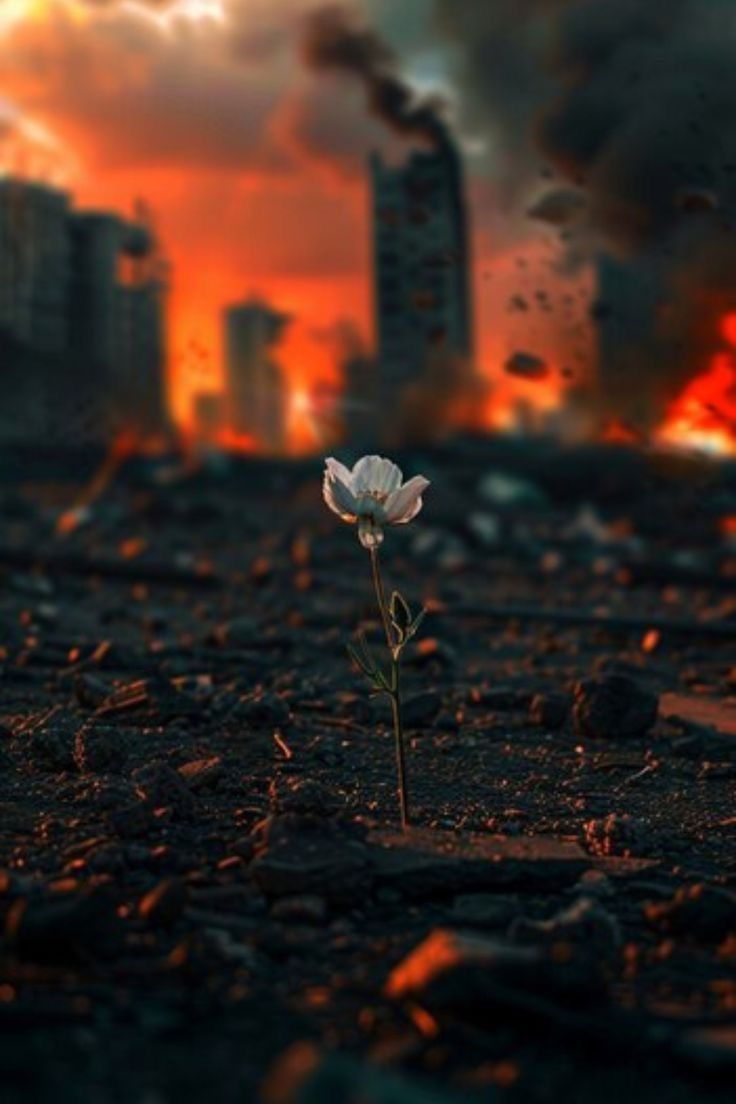
The Cost of Development
I believe development is important. I truly do. But more and more often, I find myself asking — at what cost?
Do we really care about what we’re doing around us, or are we just too busy calling it progress? Lakhs of trees are being cut down. Thousands of birds are losing their shelters. Rivers are contaminated. Fisheries are at risk. And forests — forests almost feel like a forgotten word now. What are we going to do when the trees are gone and there’s no oxygen left to breathe? What about climate conditions? The rising AQI? Are we really okay living in this situation?
The Cycle We Created
Rain still falls, but there’s no soil left to absorb it. Instead of nourishing the land, it brings floods. Then comes drought — a cycle we created ourselves. Seasons no longer follow their rhythm. We see summer in months it doesn’t belong. Rain comes when the land can’t handle it. Heat that feels unnatural and exhausting arrives without warning. The balance that sustained life for thousands of years has been broken by us in mere decades. Even our national animal is at risk. Sparrows are disappearing. Lions and tigers are losing their lives. Mountains are being carved and damaged — and somehow, we still call this development. We stay silent when mangroves are cut. We look away when forests disappear. We support it unknowingly, because we’ve been taught to believe that destruction is the price of growth.
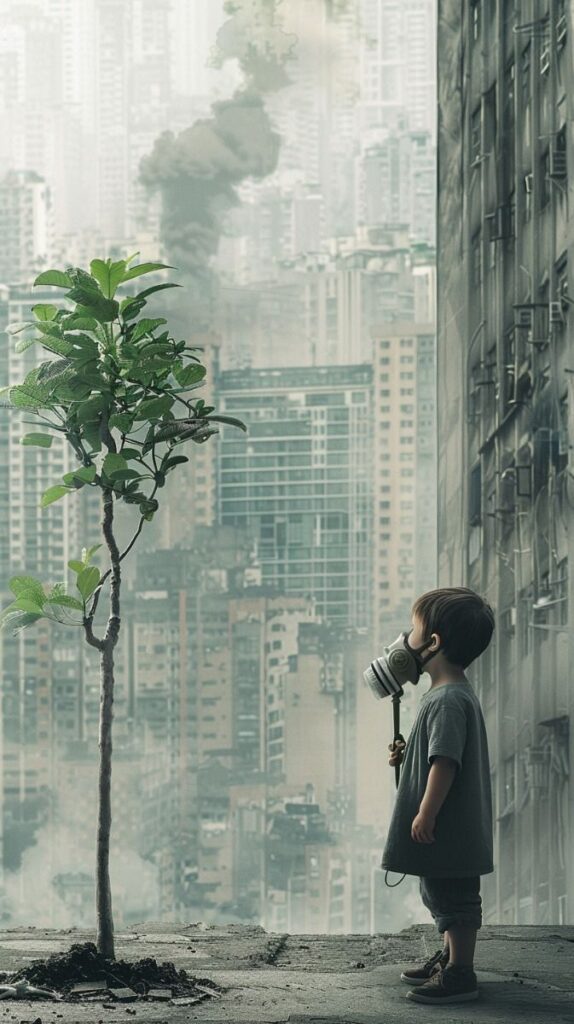
What Development Actually Means
But if development means choking the air, poisoning the water, erasing wildlife, and breaking the balance that sustains us — then this isn’t development.
It’s damage.
It’s imbalance.
It’s disaster.
And the most frightening part isn’t what we’re doing. It’s how normal it has started to feel.
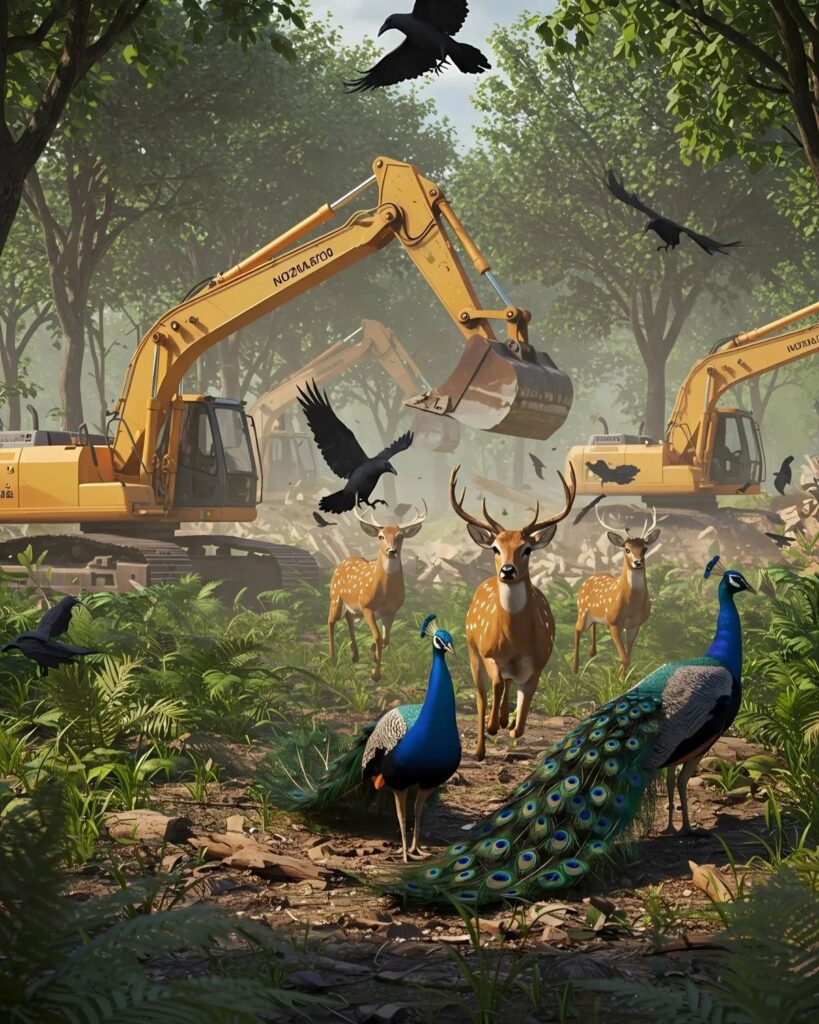
What If Nature Turns Cruel?
Look around. What have we, as individuals, done to nature under the name of development?
Where are the rivers? Where are the forests?
We all stand, or have stood, understanding our belief systems. Each one follows theirs. But in which system does it tell us to damage our surroundings? Every natural thing tries to protect the environment.
Every creature protects itself and perhaps the people around it. But look at the Aravali. Look at the rivers. The trees. The mangroves. The sea. The ponds.
How are they today? In what condition? This recent incident shook me. I was walking by the river in my city. I could only smell the foul smell and see the smoke around it. It is no longer a river. It is a graveyard.
How many trees have we cut off? The highways I travel are the roasting pan instead of tree covers.
Years ago, the same highway was looking like a beautiful cave-like formation of trees from both sides of the road. Now there is nothing. Just empty sky and concrete. We do make a record of making tunnels at certain points where earlier roads were built considering nature. But today? Today we do not even pause to think about it. We just build. We just destroy.
Need and greed are overlapping now. Yes — greed. Greed of achieving something that destroys nature. Greed of having business yet ignoring the repercussions. Mining. Thermal energy.
Industrial waste. The list goes on.
Because of these tree cuts, have you ever thought about how many animals have lost their shelters? Every time I look around, I see half-cut mountains. And then it makes me think — what is the next generation going to see?
Maybe mountains will only be in images and memories. Because we are then going to have only concrete jungles, flying roads, and gloomy life with no other species but only humans.
And there are highways, flyovers, underground road tunnels. I guess we have just excreted everything from everywhere possible. Why? Because of our own convenience. Which is good, maybe. But have we ever thought of other species? No, not really. Because we think that’s okay. Completely normal. It is not just about civilisation. It is also about how we choose to live. We want fancy lifestyles, so we use the rarest animal skin for our bags.
And some people who donate hefty amounts for animal safety and welfare will also innocently carry those bags and say it is also a kind of investment. And they say it very proudly. We will choose cruelty over humanity. We cut, scrap, waste, harm every possible part of nature as if we own them.
Who owns us, actually? Considering that nature is the supreme power and the living example of patience.
And then the question that keeps me awake at night: what if nature starts being the same way today that we are doing with nature? What if nature becomes — in short words — cruel? Or maybe inhuman?
Even wild, ruthless, and evil?
We have treated nature as if it exists only to serve us. As if its resources are infinite. As if we can take and take and take without consequence. As if destruction is simply the cost of living.
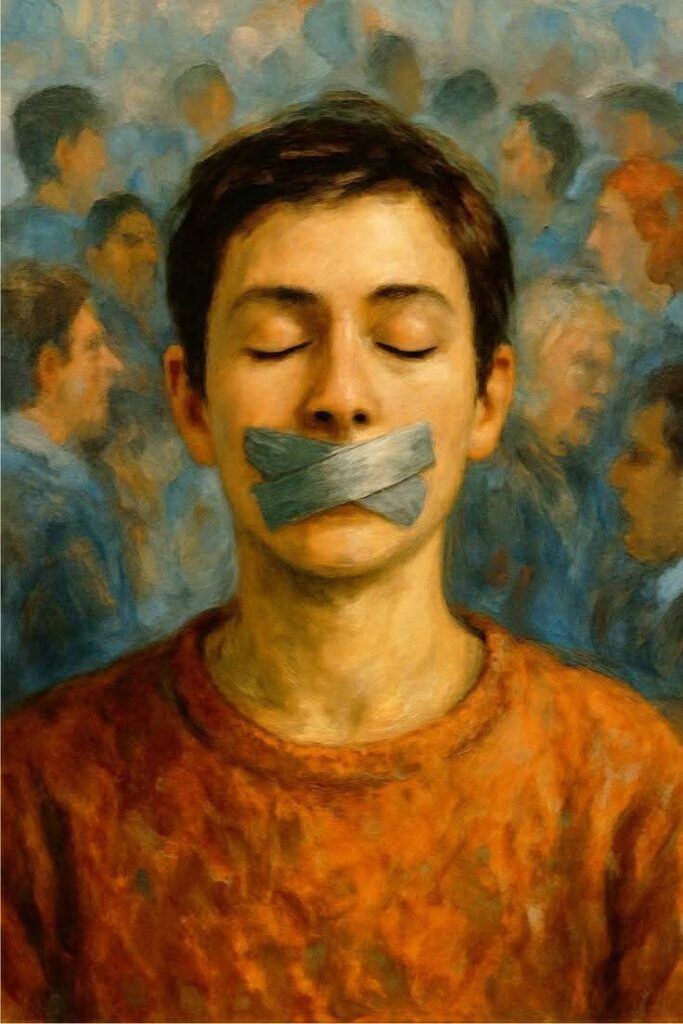
The Silence We Choose
The silence we maintain is the most damaging part. We know what is happening. We see the news. We read the reports. We understand, at some level, that this is not sustainable.
But we stay silent. We look away. We compartmentalise it into something that someone else will deal with. Someone else’s responsibility. Someone else’s problem.
We have been taught to believe that individual actions do not matter. That the problem is too big. That progress is more important than survival. That development — at any cost — is inevitable and necessary.
But what if it is not? What if the cost has already become too high?
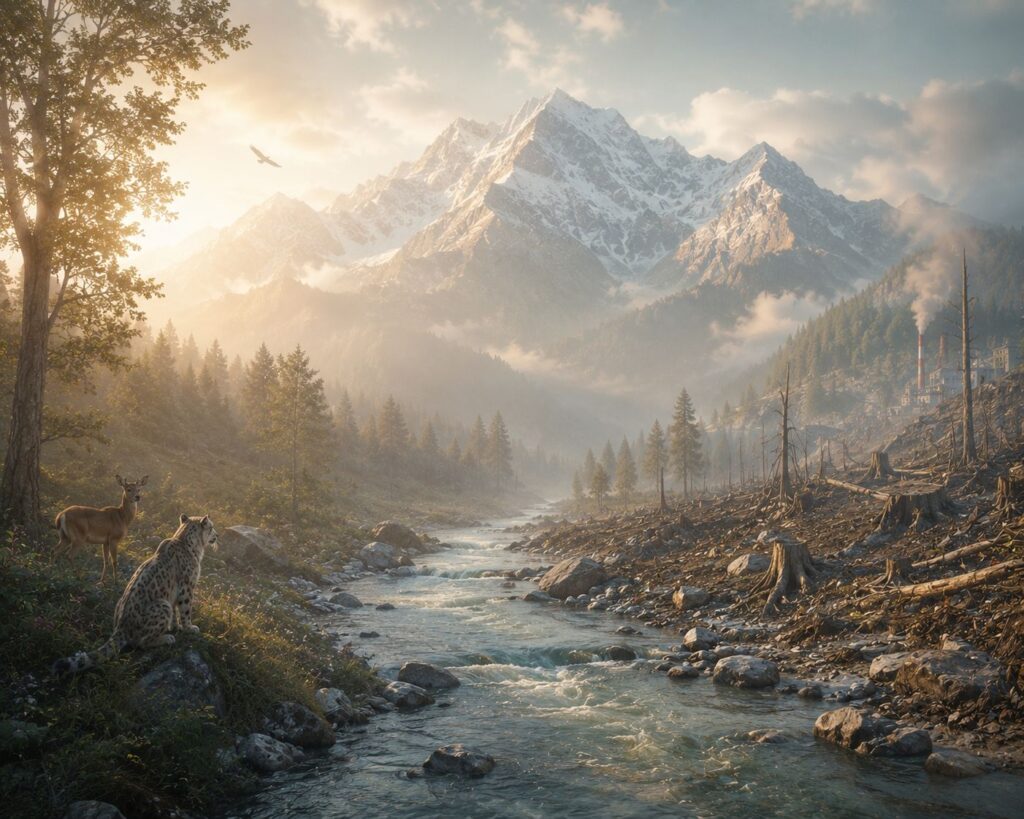
When Nature Wakes Up
The Himalayas are watching. The rivers are watching. The forests are watching. The animals that we have displaced, hunted, and erased are watching.
And maybe — just maybe — they are waiting for us to realise what we have done before they are forced to respond. Because nature does not ask for much. It asks only for love and care. It asks only that we take what we need and give back what we can. It asks only that we remember that we are part of it, not separate from it. Not above it. But we have forgotten. And in forgetting, we have become the enemy. What if the Himalayas wake up tomorrow? What if every river that we have contaminated rises in anger? What if every forest that we have cut down stops giving us the oxygen we need to breathe? We call that disaster. We call that catastrophe. But nature would simply be calling it balance.
The Choice That Remains
We still have a choice. Not much of one, and the window is closing. But it is still there.
We can choose to see development differently. Not as the conquest of nature, but as the coexistence with it. Not as progress at any cost, but as progress that costs less than our survival. We can choose to remember that the Himalayas are not sleeping. That nature is not patient forever. That the language it speaks — love and care — is the only language worth learning. We can choose to wake up before nature has to. Or we can continue as we are. Cutting trees. Poisoning rivers. Erasing animals. Calling it development. And waiting for the day when nature — finally tired, finally broken, finally cruel — wakes up and shows us what real destruction looks like.
The choice is ours. For now.
Author’s Note: Nature understands only the language of love and care. We have spoken only the language of destruction. And we are running out of time to learn to speak differently.
Leave a Reply